Cannabis is one of the most lucrative crops in the United States. The legal marijuana market grossed about $9 billion in 2017. Analysts estimate that this industry will be worth as much as $21 billion in 2021. Like all other high-growth sectors, the legal marijuana industry also presents opportunities for other businesses outside of the core marijuana growers and sellers. To benefit the industry and businesses outside the industry, grow operations need to continue to thrive, and therefore, require specialized marijuana HVAC systems that keep this profit crop healthy and fresh, and sustainable.
State of Legal Cannabis in the United States
At present, eleven states in the United States allow for the sale and recreational use of Cannabis:
Alaska
California
Colorado
Illinois
Oregon
Nevada
Maine
Massachusetts
Michigan
Washington
Vermont
different states, including New Jersey and New York, are likely to also begin allowing recreational marijuana sales in the next year. In addition to these eleven states, 30 states have some form of legal medical marijuana program.
As a result of legalization, marijuana is in huge demand. Growers have been battling to keep up with the momentum and are faced with many variables themselves to succeed in the business. They not only must keep an adequate supply of premium cannabis, but the supply must also conform with state regulations to meet the new demand. Without a well-designed grow facility these variables won’t be met and the business will undoubtedly fail.
Defining grow spaces
Most of the legal marijuana product comes from build rooms. They are designed to produce high yields of specific strains of marijuana and are customized to meet the needs of those strains. Some are completely sealed greenhouses. Others have few windows and only use special artificial lights to promote plant growth.
Why use a expand space? It’s easier to control the potency and strain of the marijuana in a carefully designed increase space than it is in an open field. The product is also safer from insects, disease, errant crop dusters, and theft.
The necessity for a Specialized HVAC System
There a few issues to consider when designing the recommended HVAC system for grow rooms. Here’s why:
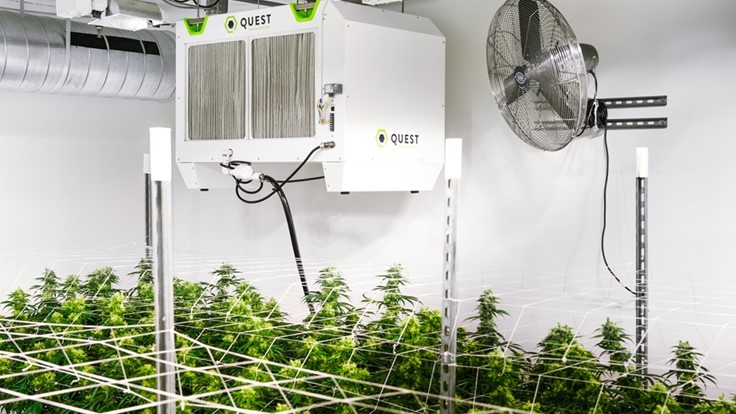
Temperature and Humidity – increase spaces must be set with specific temperature and humidity ranges. These ranges may vary depending on the crop. But, too little or too much humidity will spoil the crop.
Energy Consumption – increase rooms are also extremely energy intensive. In addition to needing powerful HVAC systems to keep temperature and humidity within range, they also require an incredible amount energy for specialized lighting. The lights are often on 24-hours a day.
Odor Management – With a high concentration of Cannabis plants, increase spaces are infamous for producing an extreme aroma within a small space.
The recommended HVAC system must help solve, if not mitigate, the problems that arise from operating a expand space.
Why Traditional HVAC Systems Fall Short
Traditional HVAC systems are often not the best choice for grow areas. One of the issues with these HVAC systems is that they are so energy intensive. They considerably increase the overall energy costs of the operation.
These traditional HVAC systems also create arid environments that are not optimal for the marijuana plants and lack the flexibility to properly control air flow. Newer HVAC systems are able to stabilize humidity levels and distribute the appropriate cooling when needed.
Hybrid and Evaporative Cooling Systems in Grow areas
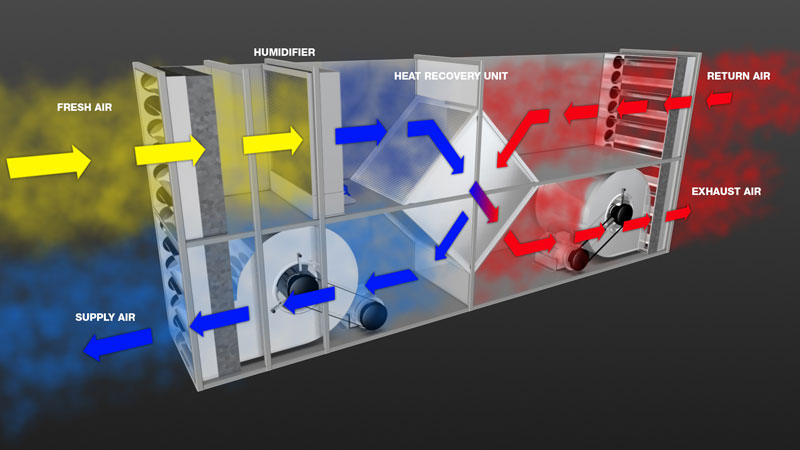
The best alternative to traditional HVAC units for grow rooms are hybrid systems or Indirect-Direct Evaporative Cooling (IDEC) systems. These systems use up to 80% less energy. They also give cultivators much more flexibility to control air flow and humidity levels.
These systems also do not require as much service or create environmental issues compared to traditional units because they have no GWP, CFCs, or HFCs. These units are better for the environment and better for business.
As the legal cannabis industry continues to increase, there will be increased demand for skilled HVAC technicians and designers who understand grow operations, HVAC needs, and know the best solution to give the undeveloped crops the chance to thrive.
 HVAC Infinity